As India approaches its 80th Independence Day, we often return to familiar stories of freedom, sacrifice and nation-building. We remember the leaders whose names have become part of our textbooks, public monuments and everyday conversations. But there is another question worth asking: Whose stories did we not hear, read, or see?
Were We in Your Classrooms? - Remembering the Women Who Shaped Modern India

Jitender
Academic Specialist – Gender

Ayushi S
Manager, Gender
15th Aug 2026
As India approaches its 80th Independence Day, we often return to familiar stories of freedom, sacrifice and nation-building. We remember the leaders whose names have become part of our textbooks, public monuments and everyday conversations. But there is another question worth asking: Whose stories did we not hear, read, or see?
This question was at the heart of our Independence Day Reflection Series, “Were We in Your Classrooms?”. Through the stories of women who participated in India’s freedom struggle and shaped the country in its formative years, the campaign invited reflections on a simple but uncomfortable thought – where are the women role models in our classrooms, textbooks and everyday lives?
We began with Kanaklata Barua, who was only 17 when she led a procession to hoist the national flag and in turn was killed by British police. Her story reminds us that young women were not merely witnesses to India’s freedom struggle; they were active participants in it.
We then remembered Ammu Swaminathan, a freedom fighter, social reformer, women’s rights advocate and member of the Constituent Assembly. Her work supported in the abolition of child marriage, affirming rights of women in inheritance, and increasing the age of consent. She was also one of the women who helped in drafting our Constitution that stands tall in ensuring rights to all the citizens of a free India.
The story of Nishat-un-Nisa takes this further. A teacher, journalist, entrepreneur, political activist and public speaker, she challenged the purdah system and entered public life at a time when doing so itself was a radical act. She broke the patriarchal mould to pave the way for more women.
We also remembered Uda Devi, a Dalit woman and warrior associated with the 1857 uprising. She is remembered for fighting against British forces during the revolt and for the extraordinary courage she displayed in battle. Uda Devi evokes the delicate yet powerful facet of gender, caste, and class intersection leaving us with a question – whose contributions are considered worthy of being remembered.
And these are only a few among countless women whose lives have remained at the margins of mainstream historical memory.
Children build their understanding of what is possible partly through the people they see represented around them.
When history repeatedly shows men as leaders, thinkers, revolutionaries, scientists, artists and decision-makers, while women appear less frequently, or only in supporting roles– it’s a gross misrepresentation. This subtly but sharply communicates a message about who is expected to lead and who is expected to follow. Thus, affirming the social gender stereotypes.
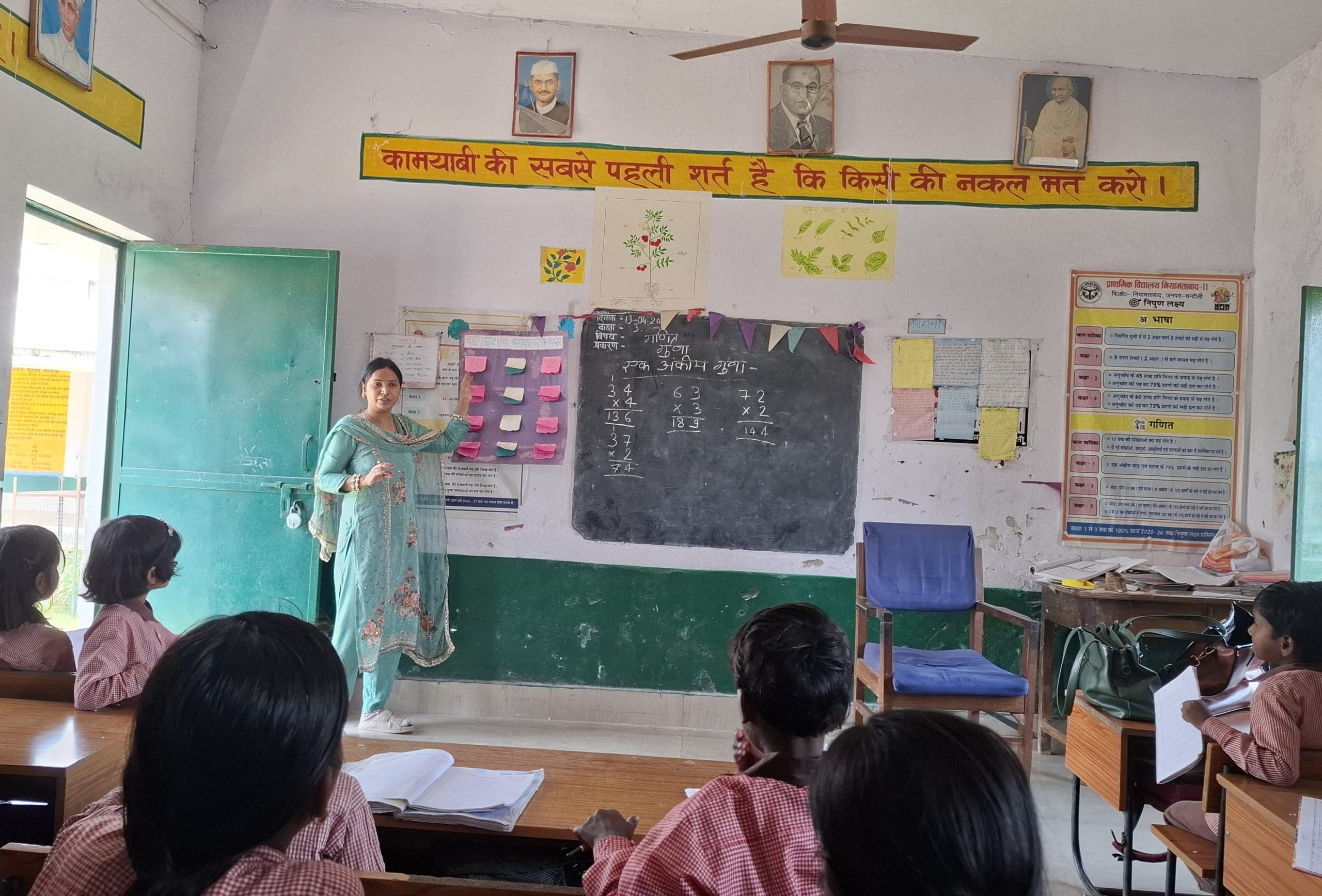
A classroom in Chandauli, Uttar Pradesh
Role models do not exist only in textbooks. They are present in the stories we tell at home, the people whose names appear on roads and buildings, the images displayed on classroom walls, the examples teachers use, the historical figures celebrated during assemblies, and the people children are encouraged to imagine themselves becoming.
The question, therefore, is not simply whether women were present in India’s history. They were. The question is whether we have made them visible enough for children to know that they were there.“Were We in Your Classrooms?” is an invitation to look again at the stories we teach, remember and celebrate and make sure that our remembering includes everyone.
And our experience suggests that with intentional and concerted efforts an affirmative response to this is possible. An example of this is set by a teacher from Chandauli, an active participant in Gender Unit’s workshop. She used images of freedom fighters from diverse social, regional and gender backgrounds— from Savitri Bai Phule to Birsa Munda. She then invited the students to explore their contributions to India’s freedom struggle, making her classroom a stage for equity and curiosity.
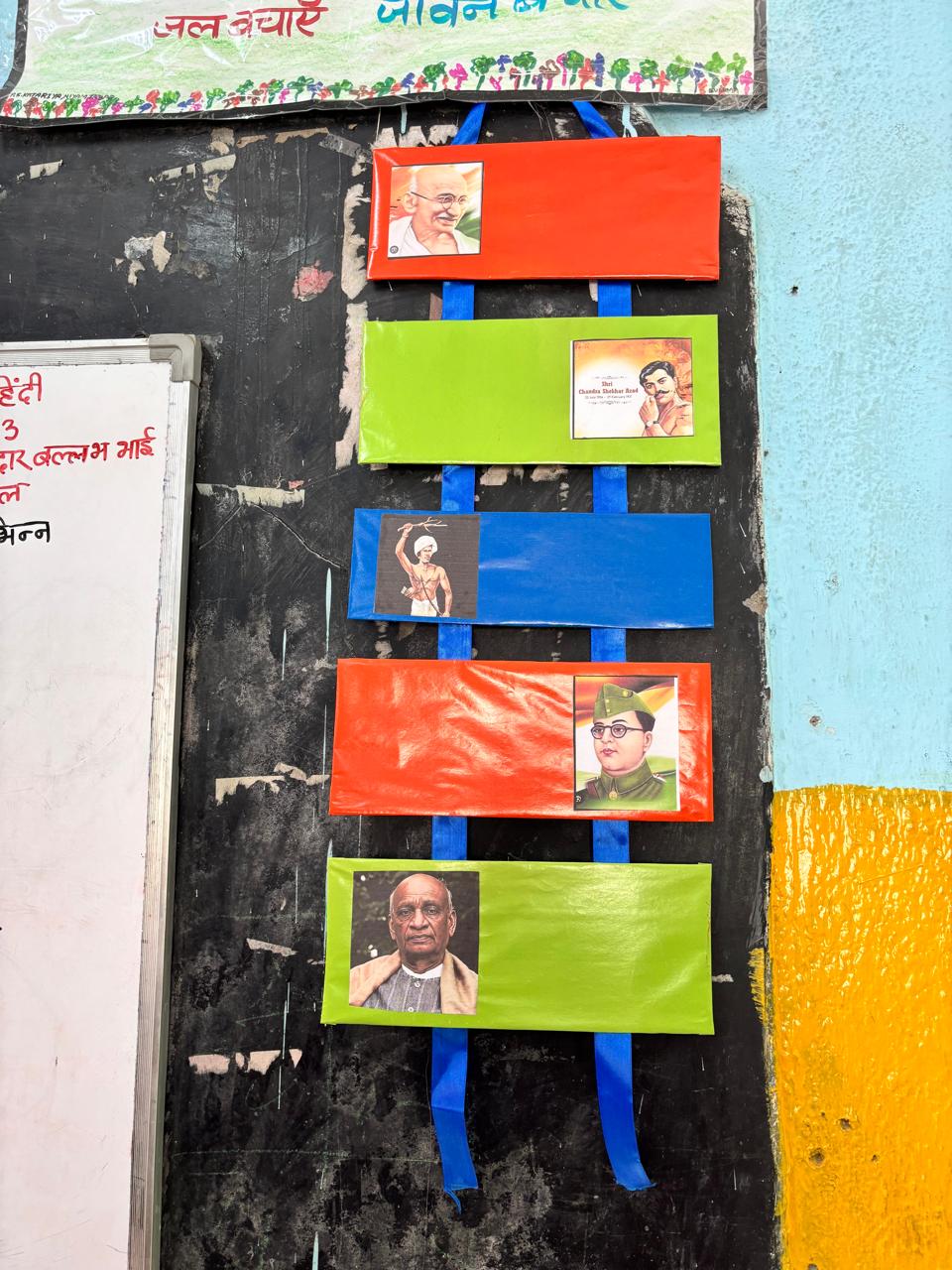
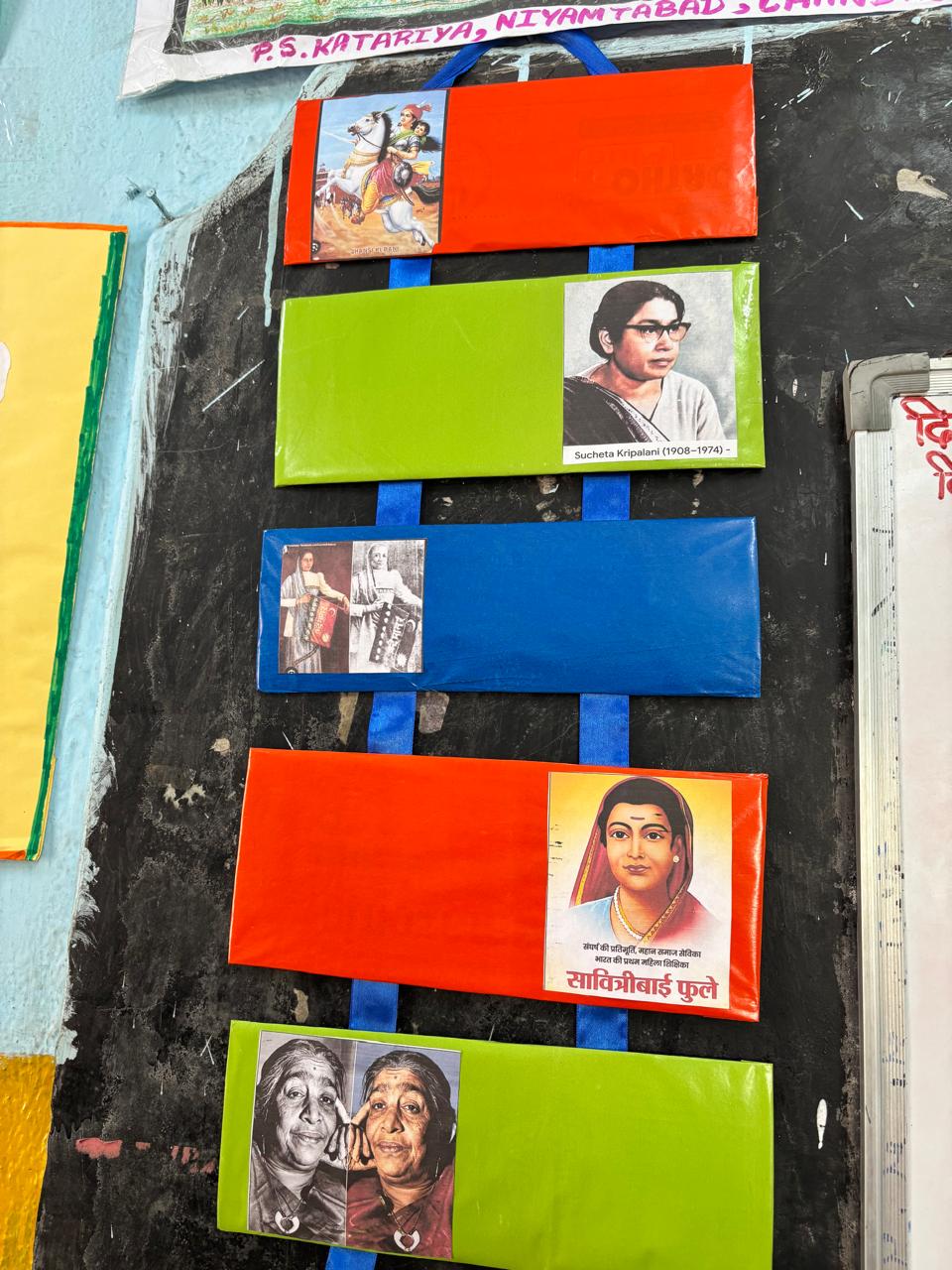
An activity for students in PS Katariya, Niyamtabad, Chandauli.
The impetus now is to create more such classrooms where the equitable representation declares “Yes, We are in the classrooms!”