On 13 January, during a visit to a government school in Khordhadistrict, Odisha, I spent time at Samantarapur Project Upper Primary School. The school serves children from Balvatika to Grade 8, and like many government schools, works with limited infrastructure. While the higher grades had separate classrooms, space constraints meant that Balvatika to Grade 3 were seated together in one large hall.
4 Grades, One Hall, and Teaching That Works

Shveta Lall
Associate Director, CPD,
Language and Learning Foundation
15th Jan 2026
On 13 January, during a visit to a government school in Khordhadistrict, Odisha, I spent time at Samantarapur Project Upper Primary School. The school serves children from Balvatika to Grade 8, and like many government schools, works with limited infrastructure. While the higher grades had separate classrooms, space constraints meant that Balvatika to Grade 3 were seated together in one large hall.
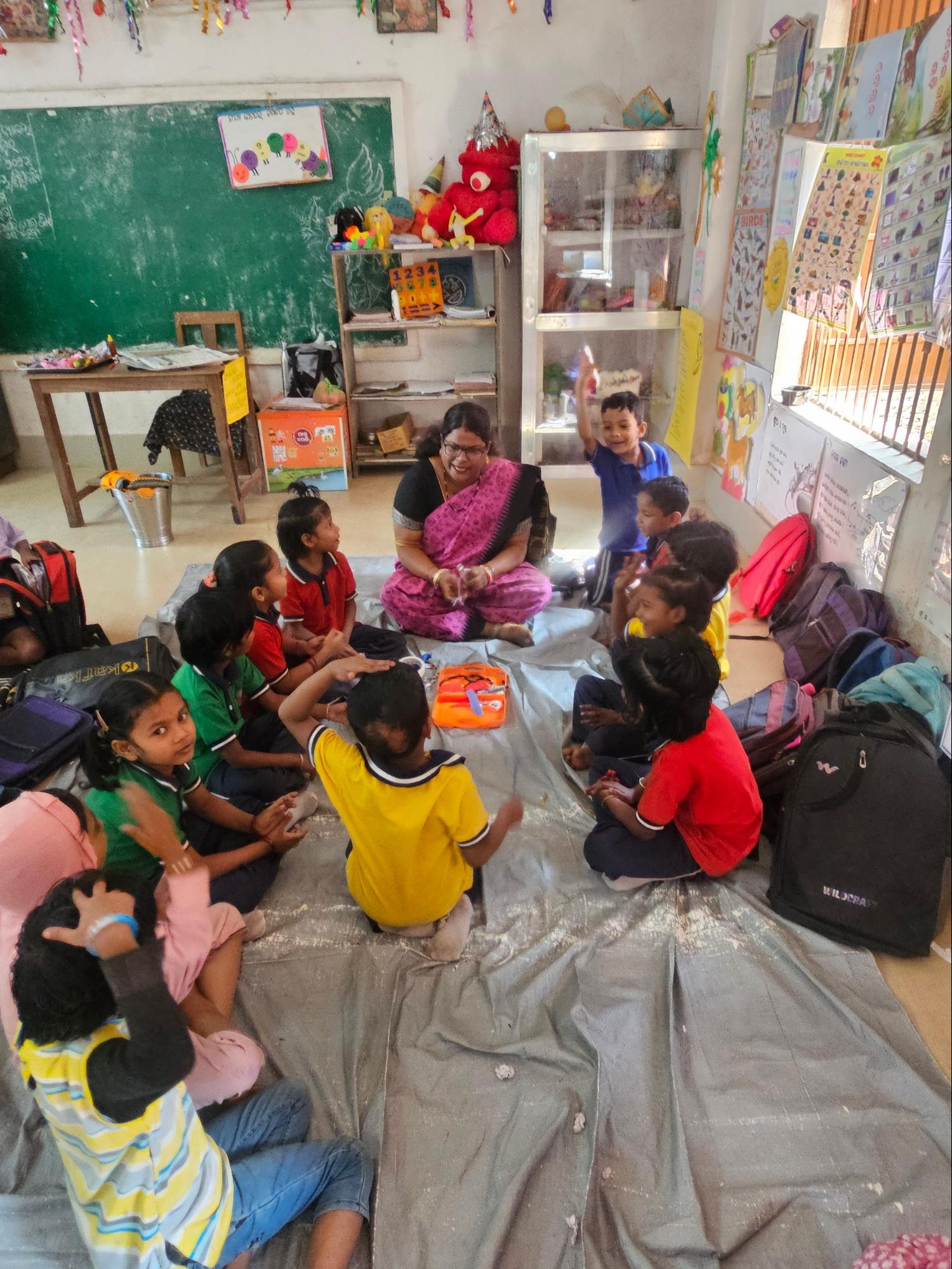
In this hall, two teachers were handling four grades, but not as one single group. The space was thoughtfully divided into two ends.One teacher worked with Balvatika and Grade 2, while the other worked with Grade 1 and Grade 3.
Anyone who has worked in schools knows how challenging this can be. Multi-grade classrooms are a reality in many Indian schools, and teachers often struggle to keep children meaningfully engaged across ages and learning levels. What I saw there stayed with me, not because it was unusual, but because it showed what is possible when teachers are prepared, thoughtful, and deeply committed to children’s learning.
Both teachers began their sessions at their respective ends with an action song. For a few minutes, the whole hall moved together. Children followed actions, laughed, and found their rhythm. That shared start helped everyone settle and focus before the teachers shifted into grade-wise work.
The teacher handling Balvatika and Grade 2 asked the Grade 2 children to self-read a chapter they had already covered earlier. While they read independently, she sat with the Balvatika children and guided them through a sorting activity using familiar materials. Once the younger children were settled and engaged, she moved back to the Grade 2 group, explained the task in their language workbook, and demonstrated one example. The Balvatikachildren continued playing and learning with the sorting materials, fully absorbed.
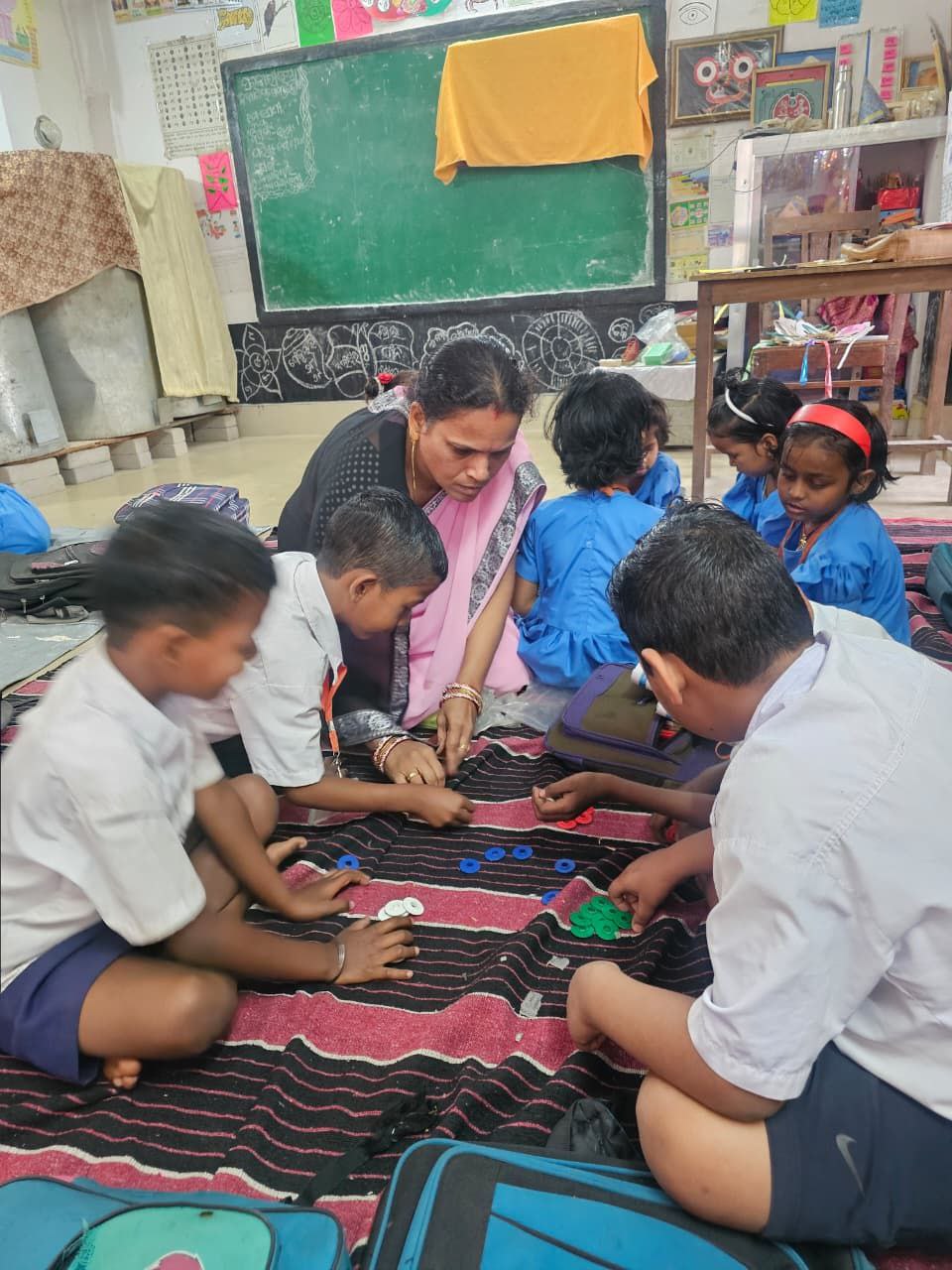
At the other end of the hall, the second teacher divided Grade 1 and Grade 3 into small groups for a maths lesson. Grade 1 children worked with coloured beads, counting them and writing the number of each colour on a sheet. Grade 3 children were given a calendar and question cards, which they used to solve problems by reading and interpreting dates.
Both teachers moved constantly between groups, checking work, asking questions, and offering support. Their energy was high, their instructions clear, and their expectations steady.
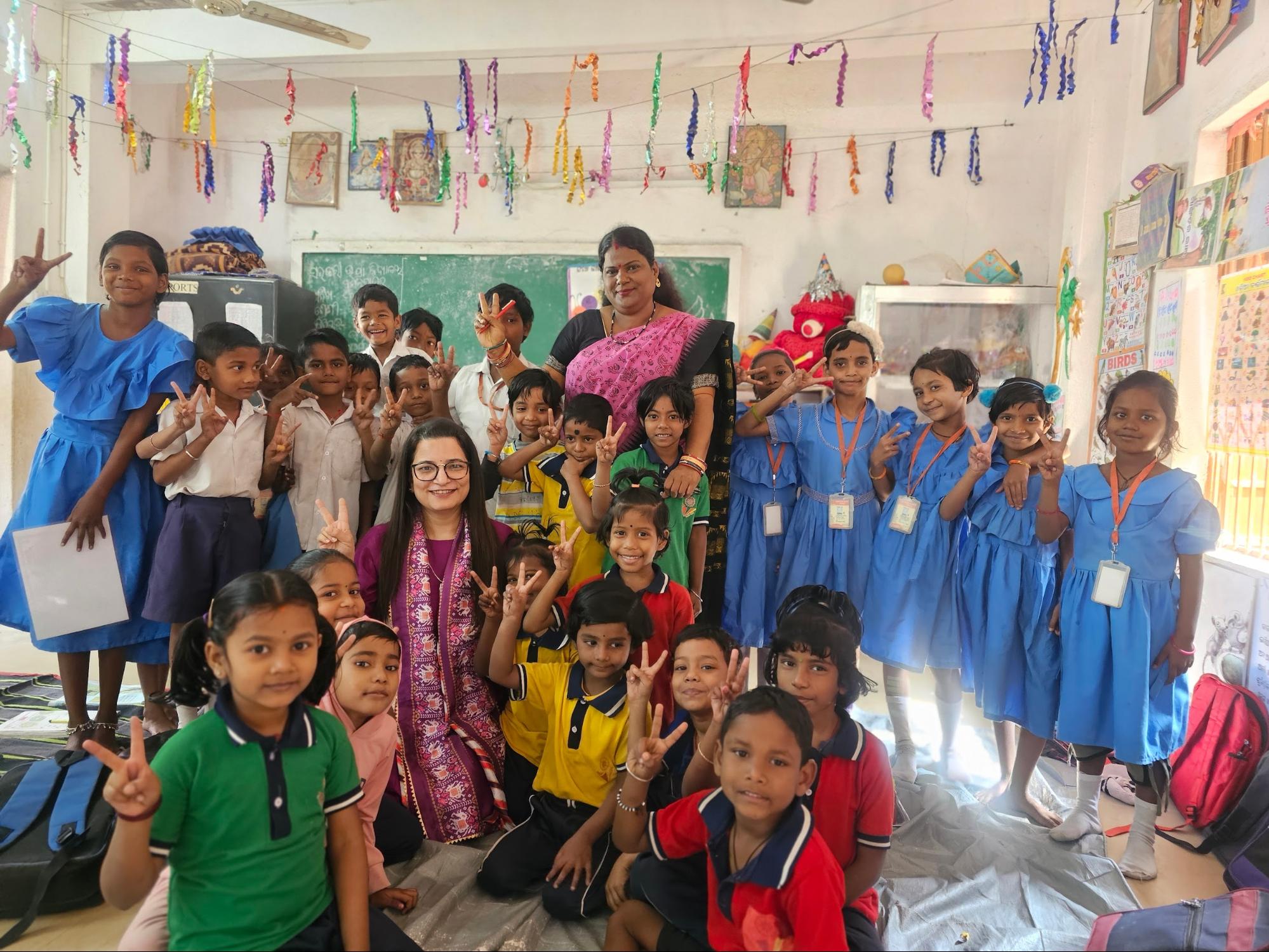
The hall was full of sound. Children reading aloud, counting, discussing, asking questions. It wasn’t quiet, but it was purposeful. Every child was engaged in learning that made sense for their level.
This visit was a reminder that constraints do not have to weaken intent. Limited space and shared classrooms are realities in many government schools, but they need not stand in the way of meaningful learning. What makes the difference is planning, clarity, and preparation. Rather than shying away from these realities, the system needs to acknowledge them and invest in supporting teachers with the right training, resources, and guidance. When teachers are prepared for the situations they are actually working in, even difficult conditions can be navigated with purpose and care.